

We may not understand what it actually means to save life on Earth.
There is something deeply unsettling and misleading about the way we speak about saving the planet. We speak in images that are easy to understand, easy to share, and easy to act upon. A forest is cut down and we feel the loss immediately. A tree is planted and we feel the restoration just as quickly. There is something deeply human about this instinct. We respond to what we can see, what we can touch, what we can participate in. Over time, environmentalism itself has taken on this same shape. It has become a reflection not only of the Earth’s needs but of our own psychological comfort. We are drawn toward solutions that offer visible proof, tangible engagement, and a sense of immediate contribution. And yet, beneath this visible narrative lies a far more consequential reality that most people are never taught.
A significant portion of the oxygen produced on this planet comes from the ocean rather than forests. Microscopic organisms known as phytoplankton, drifting near the surface of the sea, carry out photosynthesis on a planetary scale, contributing a substantial share of Earth’s oxygen production while helping regulate the atmospheric balance that makes life possible. This does not diminish the importance of forests, which remain essential for carbon storage, biodiversity, water cycles, and the integrity of terrestrial ecosystems. But it does expose something far more concerning than a simple imbalance of knowledge. It reveals that the story we tell ourselves about life on Earth is incomplete, and this incompleteness has consequences.
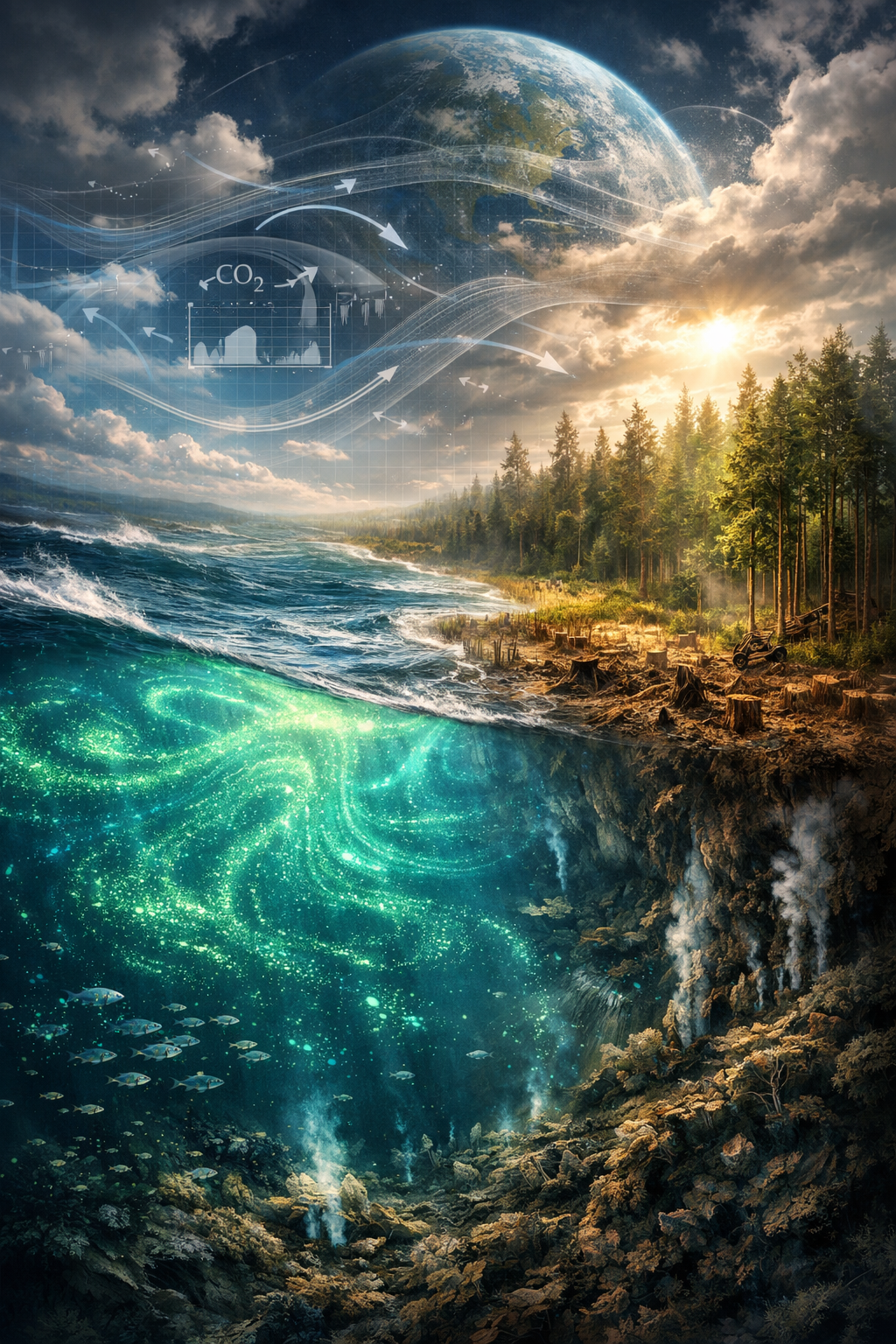
What makes this even more striking is that the science itself is neither obscure nor speculative. According to the National Oceanic and Atmospheric Administration, phytoplankton and other marine photosynthesizes are responsible for roughly half of the oxygen production on Earth, while organizations such as NASA and the Intergovernmental Oceanographic Commission have repeatedly emphasized the ocean’s central role in regulating atmospheric balance, carbon absorption, and climate stability. At the same time, scientists warn that warming seas, pollution, and acidification are already altering phytoplankton populations in ways we do not yet fully understand. This is not a fringe theory waiting to be proven. It is an established foundation of Earth system science that has simply not translated into widespread public awareness. The knowledge exists. The question is why it has not become more widely known.
Once we recognize this, a deeper question emerges—one that extends beyond oxygen, beyond trees, and beyond the ocean itself. Why is it that something so fundamental to life is not widely understood? Why is it that environmental awareness is shaped so heavily around what we can see, while the systems that quietly sustain us remain largely invisible in public consciousness? This is not simply a matter of missing information. It is a structural pattern in the way human beings engage with reality. We gravitate toward what can be simplified, what can be acted upon, and what can be demonstrated. Planting a tree is something we can do. It allows participation, it creates visible progress, it offers a sense of agency. It can be organized, funded, measured, and communicated with clarity. A campaign to plant a million trees can be understood in a moment, shared in a sentence, and supported with immediate emotional conviction.
The ocean does not offer that same accessibility. It cannot be reduced to a single act of participation. Its systems are vast, chemically complex, and deeply interconnected with climate, pollution, and global industry. One cannot gather a group of volunteers and restore phytoplankton populations in a visible, measurable way. One cannot point to a section of ocean and declare it fixed. The impact is real, but it is diffuse. The consequences are enormous, but they are often delayed, hidden beneath layers of ecological interaction that resist simplification. And so, attention drifts toward what can be more easily grasped.
This is where the problem begins to take its true form. Not as a deliberate deception, but as a structural bias. Environmental action becomes centered around what is visible, participatory, and fundable. Over time, this creates a distorted hierarchy of awareness. Forests become the symbol of planetary health, while oceans, despite covering the majority of the Earth and sustaining foundational life processes, remain abstract to most people. We are not necessarily doing the wrong things. But we may be doing incomplete things with disproportionate focus, and that imbalance has the potential to misdirect both our energy and our understanding.
If our awareness is partial, then our solutions will inevitably be partial as well. We risk investing heavily in visible restoration while neglecting the systems that sustain life at a more fundamental level. We risk confusing participation with impact. We risk believing that because we are doing something, we are doing enough. This is not an argument against tree planting or reforestation. These efforts are necessary and must continue. The issue is not that we care about trees. The issue is that we may not be thinking broadly enough about everything else.
When we look at the ocean, we are not simply looking at water. We are looking at a living system that regulates climate, absorbs carbon, supports biodiversity, and contributes significantly to the atmospheric balance that sustains all life. Yet ocean literacy remains remarkably low in public discourse. Most people can speak about deforestation with confidence, but far fewer can explain ocean acidification, nutrient imbalance, microplastic contamination, or the delicate ecological conditions that allow phytoplankton populations to thrive. This gap is not trivial. It reveals that our environmental education is still in its early stages, shaped more by what is easy to communicate than by what is necessary to understand.
What is even less discussed is that this system is not static. Research referenced by the Intergovernmental Panel on Climate Change and supported by oceanographic studies across institutions such as Woods Hole Oceanographic Institution indicates that ocean warming, acidification, and nutrient disruption are already influencing phytoplankton distribution and productivity. These microscopic organisms are highly sensitive to temperature shifts and chemical balance, meaning even subtle changes in ocean conditions can ripple through the entire planetary system. A decline or imbalance in phytoplankton populations does not simply affect oxygen production in isolation. It affects carbon cycling, marine food webs, and the stability of ecosystems that billions of people depend on, often without realizing it. We are not only dealing with something invisible. We are dealing with something fragile.
And so we must ask ourselves a more difficult question. How much of our environmentalism is guided by reality, and how much of it is guided by accessibility? How much of it is shaped by what we can easily engage with, fund, and promote, rather than by what actually sustains life at scale? In a world where attention is currency and participation is often tied to visibility, it is not unreasonable to question whether certain environmental narratives receive disproportionate focus because they are easier to mobilize around. Simpler solutions travel faster. Tangible actions attract more support. Immediate results are easier to measure and present. Over time, this creates a form of environmentalism that reflects not only ecological necessity, but psychological preference and economic structure.
This does not necessitate that anyone is intentionally misleading the public. It means we are still learning how to understand the planet in its full complexity. And in that process, we have gravitated toward what feels manageable, what feels actionable, and what feels immediate. But Planet Earth does not operate on the basis of our comfort. It operates on systems that are vast, interdependent, and often invisible to the untrained eye. If we are to truly care for it, then our awareness must evolve beyond what is easily seen.
This is where the responsibility becomes collective. Education must expand to include the systems we have neglected to understand. Just as it is considered essential to educate children through school and university in economics and the mechanics of capitalist systems, it is in fact necessary to teach them how life is sustained on this planet and how it can remain efficiently productive. Ocean literacy must become part of mainstream environmental awareness, not as a specialized field reserved for scientists, but as a foundational component of how we think about life on Earth.
Leadership must move beyond symbolic action and begin aligning policy, funding, and regulation with a deeper understanding of planetary systems. This requires more than statements of intent. It demands the integration of ocean literacy into national education frameworks, the redirection of environmental funding toward marine research and protection, and the enforcement of policies that directly address ocean pollution at its industrial sources. It means holding corporations accountable for waste and runoff that disrupt marine ecosystems, investing in global monitoring systems that track ocean health in real time, and creating international agreements that treat ocean preservation not as an optional commitment but as a shared necessity. It also requires transparency, where measurable indicators of ocean health are made visible to the public in the same way economic indicators are tracked and reported. Only through this kind of structured, continuous engagement can we move from symbolic gestures to meaningful, sustained impact.
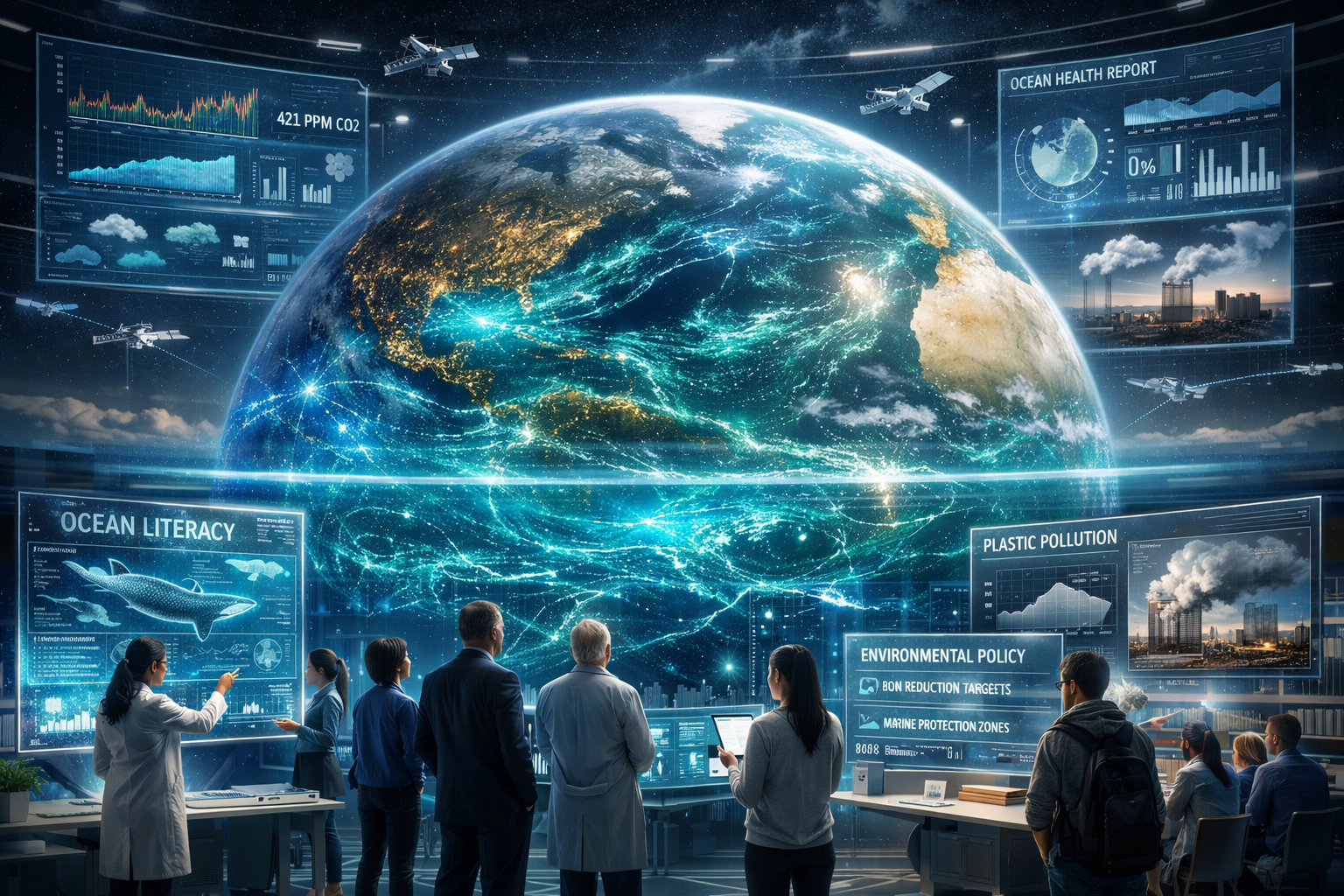
At the same time, we as individuals must mature in the way we engage with environmental action. We must become more comfortable with complexity, even when it does not offer immediate gratification. Consider a simple example: A weekend tree-planting campaign or a beach cleanup can mobilize thousands of people, generate visible progress, and create a powerful sense of contribution. These actions are good and should continue. But their impact can be limited if the underlying systems remain unchanged. The same coastline cleaned on Saturday can be re-polluted by Monday through upstream plastic leakage, untreated wastewater, or agricultural runoff that feeds algal blooms and depletes oxygen in the water, weakening the very phytoplankton systems that help regulate life on this planet. In contrast, less visible actions, such as reducing fertilizer runoff through policy, upgrading wastewater treatment, enforcing industrial discharge limits, or shifting supply chains to cut plastic at the source, may attract less public participation, yet they alter the conditions that determine long-term ocean health. We must learn to question whether our actions, however well-intentioned, are aligned with these deeper realities. We must recognize that meaningful impact is not always visible, not always immediate, and not always easily understood. And yet, it remains essential.
The truth is, we are still learning what it means to care for the Earth properly. That learning requires humility. It requires the willingness to admit that we may have focused too narrowly, that we may have simplified too quickly, and that there are aspects of life we have not yet given the attention they deserve. It requires us to expand our awareness beyond what is comfortable and to align our actions not only with what we can see, but with what we can understand.
If we can do that, then environmentalism itself can evolve. It can move from a collection of well-intentioned actions to a more integrated understanding of how life on this planet is sustained. It can become less about visible participation and more about informed responsibility. And in that shift, we may begin to act with clarity, and not only with urgency. Caring for the Earth is also about protecting what we have yet to fully understand, not only planting what we can touch.